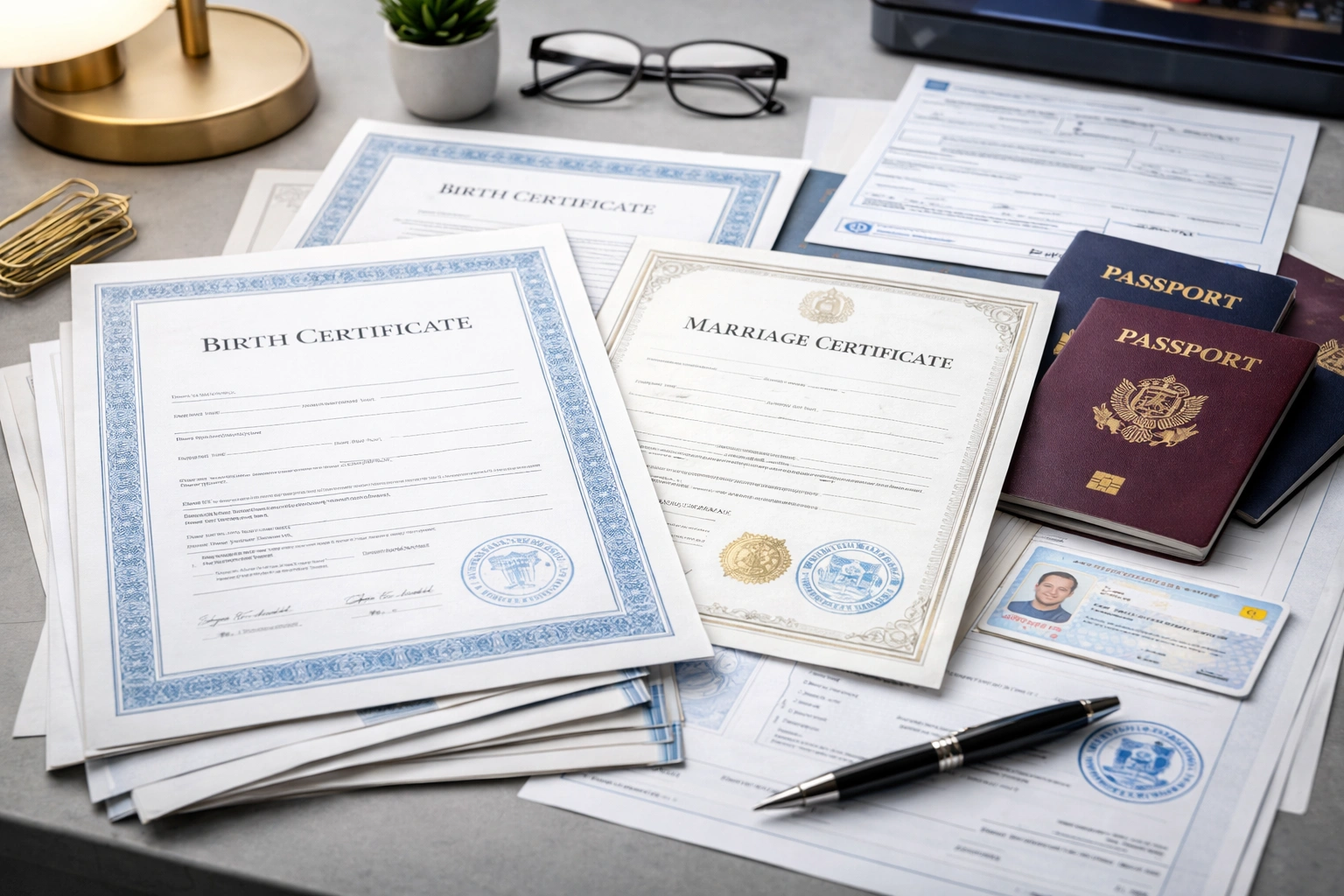
When an official document needs to be used abroad, translating it is generally not enough. In many cases, foreign authorities require the document to be both understandable and legally authenticated. This often involves two separate but complementary steps: a sworn translation and an apostille, or even legalisation depending on the destination country.
These requirements may seem technical, but they follow a simple logic: enabling foreign authorities to verify both the content of the document and its authenticity. In Brussels, where international procedures are common, this question regularly arises for individuals, companies and institutions.
What is a sworn translation and why is it necessary?
A sworn translation, also known as a certified translation, involves having a document translated by an officially accredited translator. In Belgium, these translators are recognised by the FPS Justice, and their signature gives the translation legal value.
This step is essential whenever a document must be submitted to a foreign administration in another language. It ensures that the translated content faithfully matches the original, without interpretation or approximation.
What is an apostille and what is it used for?
An apostille is an official certification issued by a competent authority — in Belgium, the FPS Foreign Affairs — which confirms the authenticity of a public document.
Unlike a sworn translation, the apostille does not concern the content of the document. It certifies only the validity of the signature, stamp or authority that issued the document.
It falls within the framework of the Hague Convention, which facilitates the recognition of documents between signatory countries.
Should the apostille be affixed to the original document or the translation?
This is an essential question and often a source of confusion.
In most cases, the apostille is affixed to the original document in its source language, in the country where the document was issued. This step certifies the authenticity of the document before any translation.
The apostilled document is then translated by a sworn translator.
However, in certain specific situations, particularly depending on the requirements of the destination country, the apostille may also be affixed to the sworn translation itself. This depends on local administrative rules and the type of document.
👉 It is therefore essential to check in advance:
- whether the apostille must be affixed to the original
- whether an additional apostille is required on the translation
A misunderstanding on this point may result in the document being refused.
Why is a sworn translation and an apostille sometimes required?
In many situations, foreign authorities require both an official translation and validation of the document’s authenticity.
The sworn translation makes the content understandable, while the apostille makes it possible to verify that the document is authentic.
When a Belgian document is used abroad, these two elements are often essential for it to be accepted.
In which cases are these formalities mandatory?
These requirements arise in many practical situations.
In the context of immigration procedures, authorities generally request official documents accompanied by a sworn translation and an apostille, notably for birth certificates or criminal record extracts.
For a marriage or divorce abroad, Belgian documents must be translated and authenticated in order to be recognised locally.
Studying abroad is another common case: universities often require an official translation of the diploma, accompanied by an apostille.
Companies are also concerned, particularly in international business procedures, setting up a subsidiary or signing contracts.
Finally, in international legal proceedings, documents must be officially translated and validated to be admissible.
Is an apostille always sufficient?
No. The apostille is valid only in relations between countries that are signatories to the Hague Convention.
If the destination country is not part of this convention, a consular legalisation procedure is required. This is generally more complex and involves several authorities, such as ministries and embassies.
Requirements therefore vary by country, making prior verification essential.
In what order should the steps be carried out?
The order of formalities is essential and often misunderstood.
In most cases, the document must first be apostilled or legalised in its country of origin, then translated by a sworn translator.
In certain specific cases, additional validation may be requested after the translation, particularly when the apostille must also cover the translation.
A common mistake is to have a document translated before obtaining the apostille. This error may result in the document being refused and require the procedure to be started again.
What are the most common mistakes?
In practice, many administrative refusals are linked to simple but avoidable mistakes.
This may involve documents translated without checking whether an apostille is required, unofficial copies used for legalisation, or confusion between an apostille and legalisation.
Failing to check whether the apostille must be affixed to the original or to the translation is also a common mistake.
Why use a professional in Brussels?
In an international environment such as Brussels, procedures relating to foreign documents are frequent but often complex.
Using a specialised agency such as Girolamo Translations helps secure the entire process. Thanks to expertise that is both linguistic and administrative, it is possible to avoid mistakes and ensure that the documents will be accepted by the relevant authorities.
Conclusion: how can administrative refusals be avoided?
Sworn translation and the apostille are two separate steps, but they are often inseparable when a document needs to be used abroad.
They ensure both that the document can be understood and that it is legally valid.
Above all, it is essential to check which document the apostille must be affixed to: the original, the translation, or both.
Anticipating these formalities and following the correct order of steps is the key to avoiding refusals and delays.
Unsure about the procedure to follow?
The Girolamo Translations team will support you and guide you through the process.